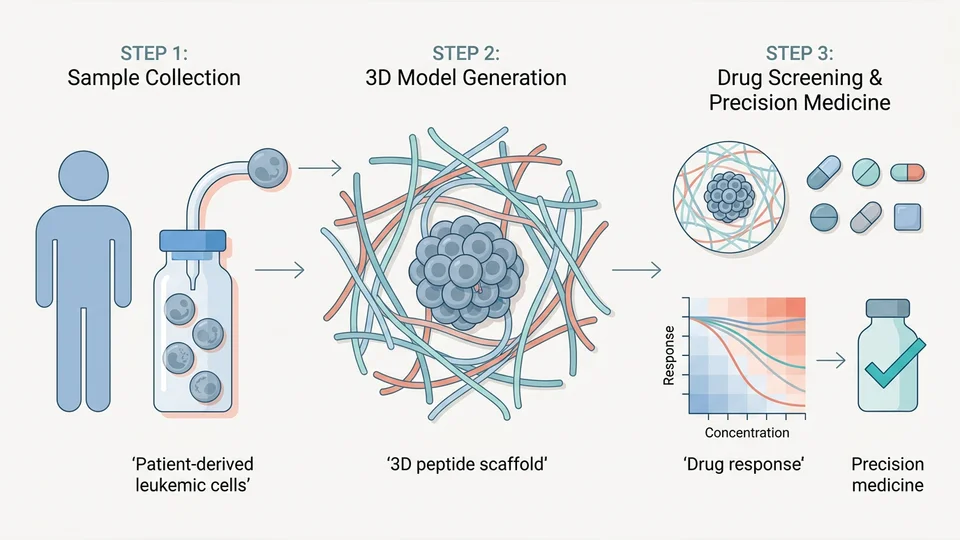
About Aleksei Matveev Aleksei Matveev Visiting Student, Bio-Ontology Research Group Aleksei Matveev is a visiting MSc student in molecular biology from Kazan Federal University, Russia, hosted by the Bio-Ontology Research Group at the KAUST Computational Bioscience Research Center (CBRC) under Professor Robert Hoehndorf from April through July 2026. At BORG he works on organoid and patient-derived disease model systems in support of the group's leukemia and precision medicine research, contributing wet-lab molecular and cell biology expertise (cell-line generation, lysosome isolation, lipidomic and CRISPR sample preparation, microscopy, and flow cytometry) gained during prior Projects Related Projects 2023 Disease Models from Patient-derived Leukemic Cells in Biomimetic Peptide Scaffolds for Precision Medicine Applications Sun, Jan 1 2023 - Thu, Dec 31 2026 Neuro-Symbolic AI Rare disease Acute myeloid leukemia (AML) has a five-year survival rate of roughly 24% in Saudi Arabia and is the second most common adult leukemia subtype in the Kingdom. Treatment selection still rests on cytogenetic risk stratification — a coarse instrument that misses much of the molecular heterogeneity now known to drive drug response. Compounding the problem, almost every published AML drug-response prediction model has been trained on Western cohorts, and existing 3D culture systems for leukemia rely on animal-derived matrices that resist standardization. This project (2023–2026, KAUST Smart-Health
Disease Models from Patient-derived Leukemic Cells in Biomimetic Peptide Scaffolds for Precision Medicine Applications Sun, Jan 1 2023 - Thu, Dec 31 2026 Neuro-Symbolic AI Rare disease Acute myeloid leukemia (AML) has a five-year survival rate of roughly 24% in Saudi Arabia and is the second most common adult leukemia subtype in the Kingdom. Treatment selection still rests on cytogenetic risk stratification — a coarse instrument that misses much of the molecular heterogeneity now known to drive drug response. Compounding the problem, almost every published AML drug-response prediction model has been trained on Western cohorts, and existing 3D culture systems for leukemia rely on animal-derived matrices that resist standardization. This project (2023–2026, KAUST Smart-Health