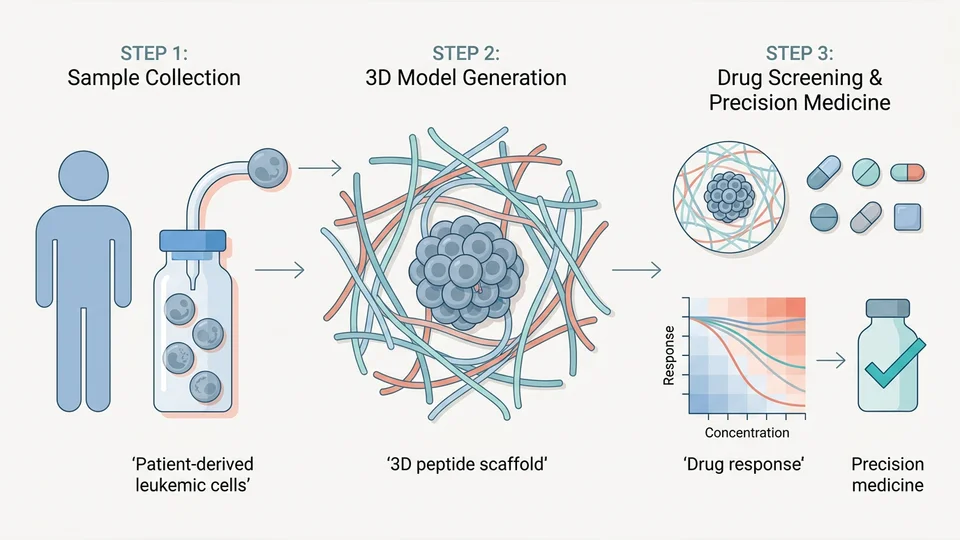
About Sawsan Al Boeisa Sawsan Al Boeisa M.S. (former), Bioengineering Biomedical Informatics bioengineering Sawsan Al Boeisa completed her MSc in Bioengineering at KAUST in 2025 under the supervision of Robert Hoehndorf, with co-supervision and laboratory hosting from the Merzaban lab. She defended her thesis on 17 November 2025 and the final document was archived in the KAUST repository in December 2025. Her thesis, Differential Effects of p38 MAPK Inhibition on Chemoresistance in Patients with Colorectal Cancer, is a wet-lab pilot study in translational cancer biology. It investigates whether pharmacological inhibition of p38 MAPK can reverse or modulate chemoresistance in patient-derived Projects Related Projects 2023 Disease Models from Patient-derived Leukemic Cells in Biomimetic Peptide Scaffolds for Precision Medicine Applications Sun, Jan 1 2023 - Thu, Dec 31 2026 Neuro-Symbolic AI Rare disease Acute myeloid leukemia (AML) has a five-year survival rate of roughly 24% in Saudi Arabia and is the second most common adult leukemia subtype in the Kingdom. Treatment selection still rests on cytogenetic risk stratification — a coarse instrument that misses much of the molecular heterogeneity now known to drive drug response. Compounding the problem, almost every published AML drug-response prediction model has been trained on Western cohorts, and existing 3D culture systems for leukemia rely on animal-derived matrices that resist standardization. This project (2023–2026, KAUST Smart-Health
Disease Models from Patient-derived Leukemic Cells in Biomimetic Peptide Scaffolds for Precision Medicine Applications Sun, Jan 1 2023 - Thu, Dec 31 2026 Neuro-Symbolic AI Rare disease Acute myeloid leukemia (AML) has a five-year survival rate of roughly 24% in Saudi Arabia and is the second most common adult leukemia subtype in the Kingdom. Treatment selection still rests on cytogenetic risk stratification — a coarse instrument that misses much of the molecular heterogeneity now known to drive drug response. Compounding the problem, almost every published AML drug-response prediction model has been trained on Western cohorts, and existing 3D culture systems for leukemia rely on animal-derived matrices that resist standardization. This project (2023–2026, KAUST Smart-Health