
Whole genome sequencing of rare disease patients
Overview
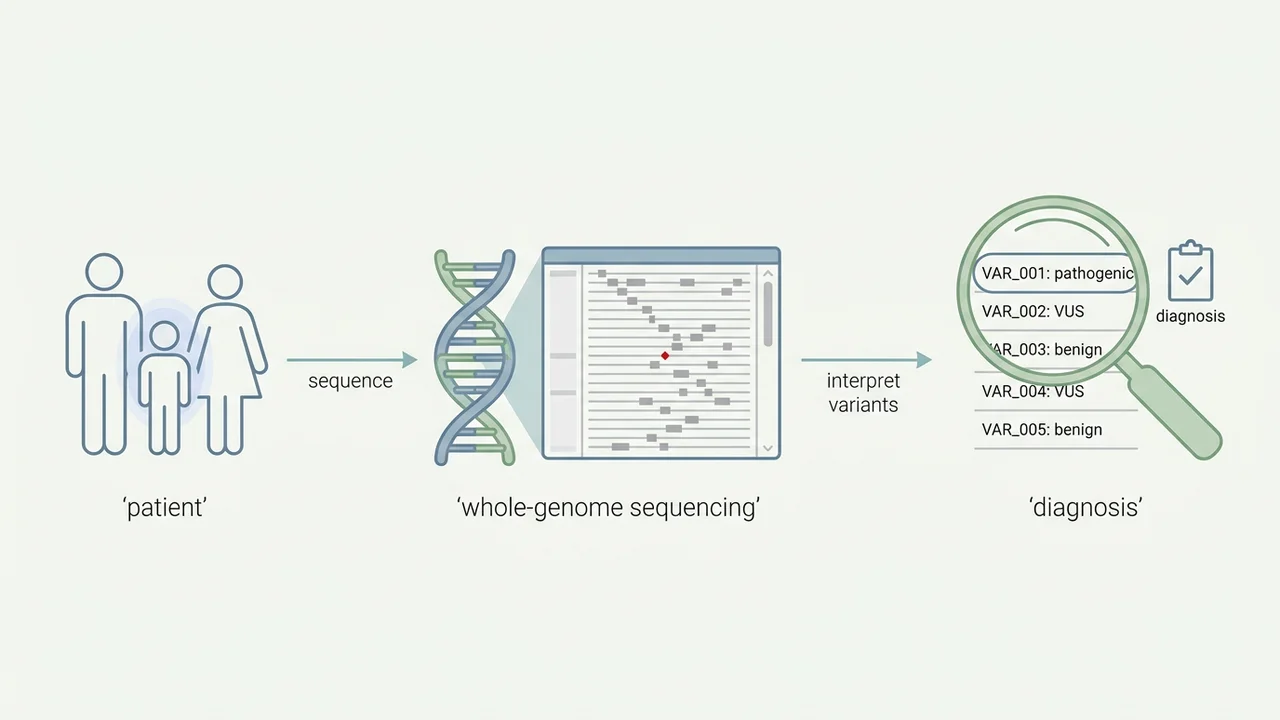
This 2019 Office of Sponsored Research pilot was a short, focused collaboration with KAUST Health to put whole-genome sequencing in front of rare-disease cases for the first time at KAUST. Saudi Arabia has an unusually high prevalence of recessive Mendelian disease driven by high rates of consanguinity, yet at the time first-tier genomic diagnosis was rarely available locally. The pilot was designed to test the end-to-end pathway — patient identification, sample handling, sequencing, variant calling, phenotype-driven prioritization, and clinical interpretation — inside KAUST rather than relying on send-out testing.
The group's contribution was on the analysis side: applying phenotype-based variant prioritization methods (the PhenomeNet Variant Predictor family) to the resulting whole-genome data, and working with KAUST Health clinicians to translate prioritized candidate variants into something interpretable in a clinical encounter. The pilot was small and intentionally so; its role was to de-risk the workflow and to build the institutional relationships that later supported larger genomic-medicine work at KAUST. No publications were produced under this specific grant, but the operational experience fed directly into subsequent variant-prioritization and Saudi population-health projects.
Period: 2019–2019
Funding
- KAUST OSR Director's Award, Digital Health Initiative
— Grant ID:
REP/1/4133-01-01(PI) — USD 138,600
Team
- Robert Hoehndorf — PI (KAUST (Professor of Computer Science))
Topics: Rare disease