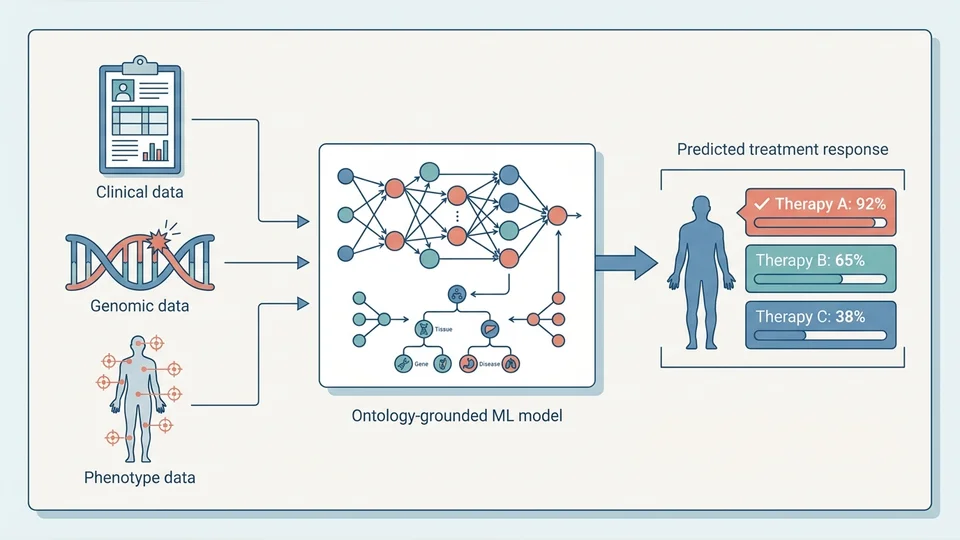
Personalized cancer treatment prediction (KCSH Pathway to Impact 2025) Wed, Jan 1 2025 - Thu, Dec 31 2026 Neuro-Symbolic AI Rare disease Predicting which drug will work for which patient is one of the oldest unsolved problems in oncology, and it is especially acute in Saudi Arabia, where colorectal cancer is the most common cancer in men and is shifting toward younger ages, and hepatocellular carcinoma incidence has roughly doubled in two decades. Contemporary machine learning models for drug response largely ignore the decades of curated biological knowledge that surrounds them, and they are almost never trained on Saudi populations. This project, funded under the KCSH Pathway to Impact 2025 call and running 2025-2026, aims to
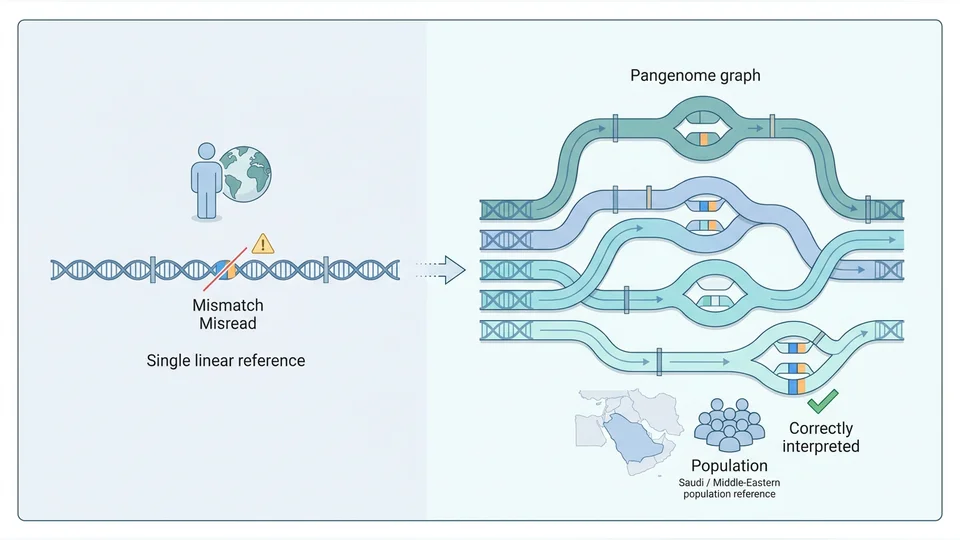
A public Saudi pangenome as reference for genomics in the Middle East Mon, Jan 1 2024 - Thu, Dec 31 2026 genomics Neuro-Symbolic AI Rare disease Human reference genomes such as GRCh38 are built largely from a single individual of mixed African-European ancestry, and they systematically misrepresent the genetic structure of populations that diverged from that backbone, especially populations like those of the Arabian Peninsula that were historically organized in tribal structures with high in-tribe marriage. The consequence in clinical practice is a reference bias that inflates the apparent variant count by millions, complicates interpretation, and lengthens diagnostic turnaround. With more than half of marriages in Saudi Arabia
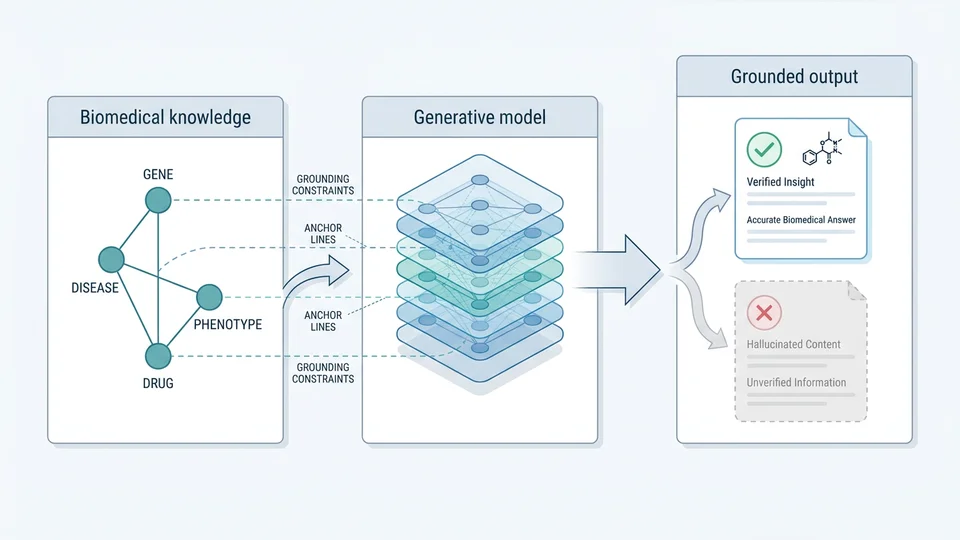
KAUST Center of Excellence for Generative AI (Health and Wellness, BCB theme) Mon, Jan 1 2024 Research Drug mechanisms Neuro-Symbolic AI Rare disease The KAUST Center of Excellence for Generative AI has a Health and Wellness theme, and within that theme the Bioinformatics and Computational Biology (BCB) workstream is responsible for the bio-side problems that generic generative models cannot solve on their own: protein and antibody design, population-specific drug development, and clinical foundation models that can actually reason with structured biomedical knowledge. The BORG group leads the neuro-symbolic and ontology-based components of this work (Sub-WBS FCC/1/5940-07-02), in partnership with Xin Gao's group on AI/drug design and the
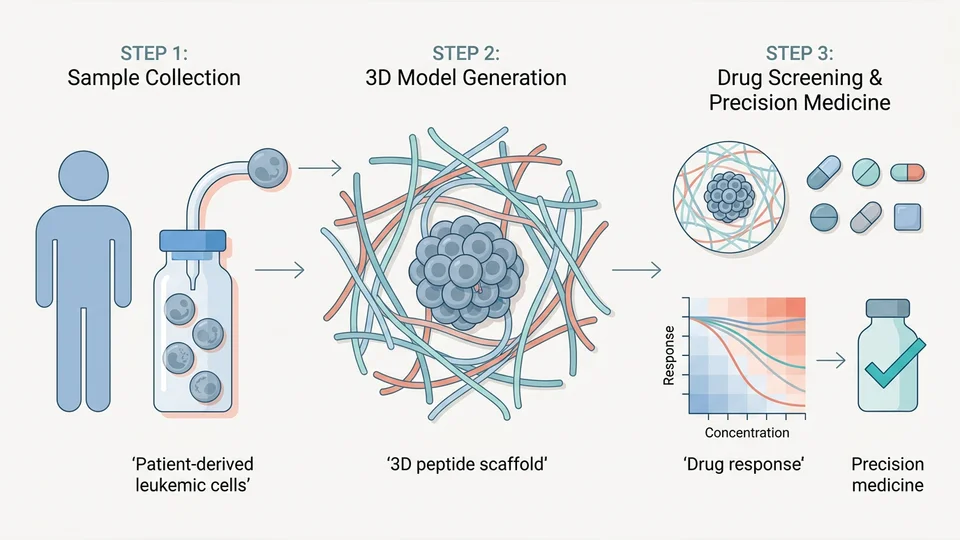
Disease Models from Patient-derived Leukemic Cells in Biomimetic Peptide Scaffolds for Precision Medicine Applications Sun, Jan 1 2023 - Thu, Dec 31 2026 Neuro-Symbolic AI Rare disease Acute myeloid leukemia (AML) has a five-year survival rate of roughly 24% in Saudi Arabia and is the second most common adult leukemia subtype in the Kingdom. Treatment selection still rests on cytogenetic risk stratification — a coarse instrument that misses much of the molecular heterogeneity now known to drive drug response. Compounding the problem, almost every published AML drug-response prediction model has been trained on Western cohorts, and existing 3D culture systems for leukemia rely on animal-derived matrices that resist standardization. This project (2023–2026, KAUST Smart-Health
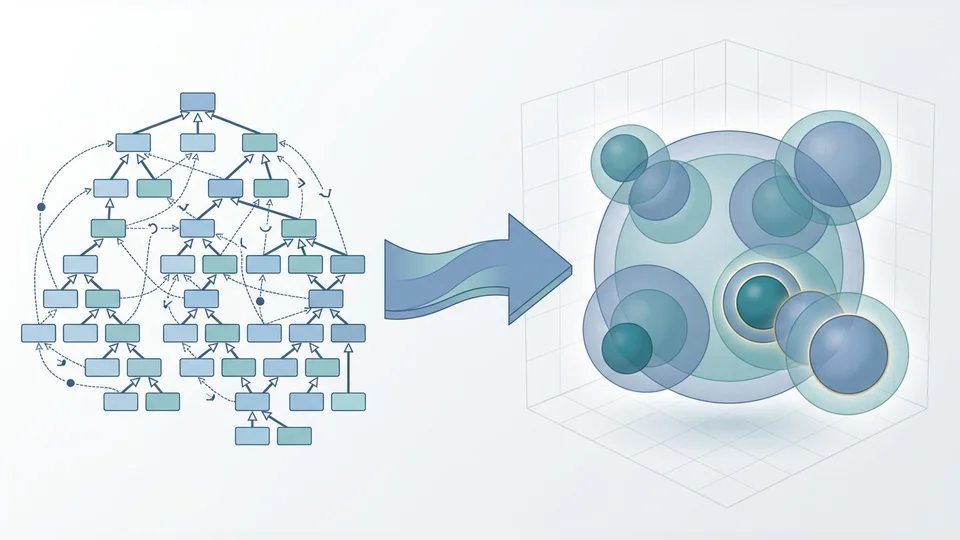
Towards sound, complete, and explainable machine learning with biomedical ontologies (CRG11) Sun, Jan 1 2023 - Thu, Dec 31 2026 Applied Ontology Neuro-Symbolic AI Ontology engineering Semantic similarity Deep learning has driven much of the recent progress in bioinformatics, but the resulting models are essentially black boxes: it is hard or impossible to ask why a prediction was made, to verify it against existing knowledge, or to detect biases that emerge from the interaction of dataset, architecture, and training objective. In clinical and biomedical settings these limitations matter, both because clinicians need to trust the systems they use and because formal guarantees of soundness and fairness can only be obtained when the inferential machinery can be inspected. The grand challenge