Drug mechanisms
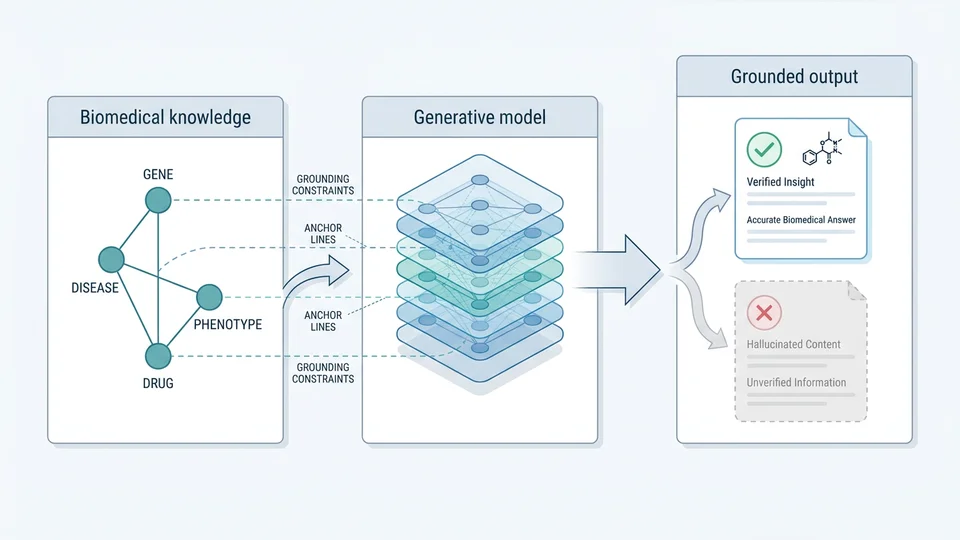
Pharmacology sits at the intersection of molecules, cells, organs, and patient outcomes, and understanding the mechanism of a drug requires reasoning across all of these scales. We apply ontologies, knowledge graphs, and semantic representations to model drug-target interactions, drug indications, and adverse drug reactions, linking molecular biology to systems-level physiology through causal structures over biomedical knowledge. The aim is to move beyond statistical associations to mechanistic, machine-readable models of drug action that can support repurposing, anticipate adverse effects, and connect pharmacological observations to underlying genotype, phenotype, and pathway information.
Drug-target interactions and repurposing
Identifying the targets of a drug, and the diseases for which it might be effective, has been a long-standing focus. Mouse model phenotypes provide information about human drug targets demonstrated that the phenotypic consequences of gene perturbation in mice carry usable signal for computational drug-target identification, and Linking PharmGKB to phenotype studies and animal models of disease for drug repurposing used PhenomeNET similarity to combine PharmGKB drug-gene associations with model-organism phenotypes for repurposing. These ideas matured into DTI-Voodoo: machine learning over interaction networks and ontology-based background knowledge predicts drug-target interactions, which combines interaction networks with ontology-based features in a graph learning framework, and into Combining biomedical knowledge graphs and text to improve predictions for drug-target interactions and drug-indications, which jointly exploits structured knowledge graphs and biomedical literature to predict both targets and indications. The earlier Identifying aberrant pathways through integrated analysis of knowledge in pharmacogenomics established the systems-biology framing: complex diseases arise from disturbed pathways, and effective intervention must target those pathways while sparing normal physiology.
Adverse drug reactions and causal knowledge
Adverse drug reactions are a major source of morbidity, yet the relative severity of different reactions is not systematically captured in public resources. Ranking Adverse Drug Reactions With Crowdsourcing developed a crowdsourced ranking of ADRs by severity, providing a resource for risk-benefit assessment and for triaging computational predictions. More recently, Causal knowledge graph analysis identifies adverse drug effects introduced mediation analysis over causal biomedical knowledge graphs to distinguish direct from indirect drug effects, allowing predicted ADRs to be associated with explicit mechanistic hypotheses rather than opaque correlations. This causal perspective complements DeepViral: prediction of novel virus-host interactions from protein sequences and infectious disease phenotypes, which combines protein sequence with infectious-disease symptomatology to predict virus-host interactions and inform antiviral target discovery.
Drug discovery also depends on engineered biologics, and Nanodesigner: resolving the complex-CDR interdependency with iterative refinement addresses the co-design of antigen-binding interfaces in nanobodies through iterative refinement, while Molecular basis and cellular effects of Janus-class-driven cytoplasmic PYK2 coacervates contributes mechanistic insight into kinase biology and biomolecular condensate formation that is increasingly relevant to drug targeting. The systems-biology framing connects to broader infrastructure work in Semantic Systems Biology: Formal Knowledge Representation in Systems Biology for Model Construction, Retrieval, Validation and Discovery, which laid out how formal knowledge representation can support model construction and validation across scales. DDIEM: drug database for inborn errors of metabolism applies this perspective specifically to inborn errors of metabolism, where therapeutic strategies must be matched to defects in specific enzymes or regulatory mechanisms.
These methods feed into ongoing programs, including the BCB theme of the KAUST Center of Excellence for Generative AI in Health and Wellness, and into applied collaborations on cancer survival modeling through DeepMOCCA and on biologics design through NanoDesigner. By grounding drug-mechanism prediction in causal, ontology-backed knowledge graphs, the work aims to make pharmacological inference auditable, mechanism-aware, and directly connected to the wider landscape of biomedical knowledge.
Projects
- KAUST Center of Excellence for Generative AI (Health and Wellness, BCB theme) (2024–ongoing)
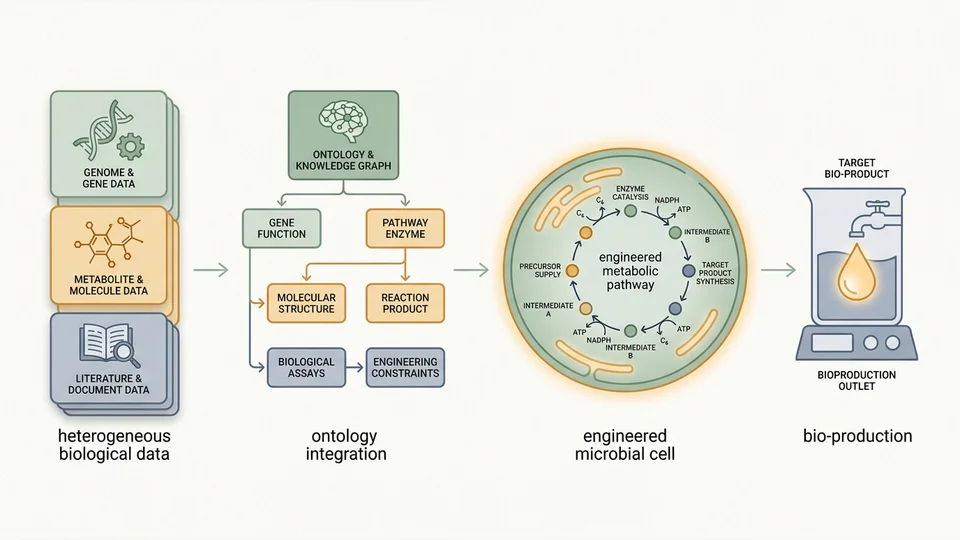
- Data integration and ontologies for microbial cell factories (2016–2018)
Software
- SmuDGE — Semantic disease-gene embeddings; integrates phenotype, function and pathway ontologies into a unified vector space for downstream prediction.
- Multi-Drug Embedding — Drug repurposing method that learns joint embeddings of drugs, targets and diseases from biomedical knowledge graphs and the scientific literature.
- DeepMOCCA — Graph neural network for cancer survival analysis that integrates multi-omics (mutation, expression, methylation, CNV) with a curated cancer knowledge graph.
- PathoPhenoDB — Curated database of pathogens and the disease phenotypes they cause, distributed as an OWL ontology and an interactive web application.
- NanoDesigner — Iterative refinement framework for nanobody/CDR design that explicitly models the antigen–CDR interdependence; companion code to the NanoDesigner paper.
Publications (12)
- (2026) Alsulami, Lehmann, Daga, Khan et al.. LEP-AD: language embedding of proteins and attention to drugs predicts drug-target interactions Journal of Cheminformatics.
- (2026) Colombo, Salem, Szczepski, Yu et al.. Molecular basis and cellular effects of Janus-class–driven cytoplasmic PYK2 coacervates Communications Biology.
- (2026) Ashhad, Mashkova, Henao, Hoehndorf. SIDEKICK: A Semantically Integrated Resource for Drug Effects, Indications, and Contraindications The Semantic Web -- ESWC 2026.
- (2025) Rios Zertuche, Kafkas, Renn, Rueping et al.. Nanodesigner: resolving the complex-CDR interdependency with iterative refinement Journal of Cheminformatics.
- (2025) Toonsi, Schofield, Hoehndorf. Causal knowledge graph analysis identifies adverse drug effects Bioinformatics.
- (2025) Alhattab, Barakeh, Khoja, Elhadi et al.. Su1295: Chemically defined peptide-based matrices enabling the development of colorectal organoid models for therapeutic applications and disease modeling Gastroenterology.
- (2022) Mona Alshahrani, Abdullah Almansour, Asma Alkhaldi, Maha A. Thafar et al.. Combining biomedical knowledge graphs and text to improve predictions for drug-target interactions and drug-indications PeerJ.
- (2021) Liu-Wei, Kafkas, Chen, Dimonaco et al.. DeepViral: prediction of novel virus–host interactions from protein sequences and infectious disease phenotypes Bioinformatics.
- (2021) Tilman Hinnerichs, Robert Hoehndorf. DTI-Voodoo: machine learning over interaction networks and ontology-based background knowledge predicts drug interactions Bioinformatics.
- (2020) Marwa Abdelhakim, Eunice McMurray, Ali Raza Syed, Senay Kafkas et al.. DDIEM: drug database for inborn errors of metabolism Orphanet Journal of Rare Diseases.
- (2015) Gottlieb, Hoehndorf, Dumontier, Altman. Ranking Adverse Drug Reactions With Crowdsourcing J Med Internet Res.
- (2015) Hoehndorf, Gruenberger, Gkoutos, Schofield. Similarity-based search of model organism, disease and drug effect phenotypes Journal of Biomedical Semantics.